
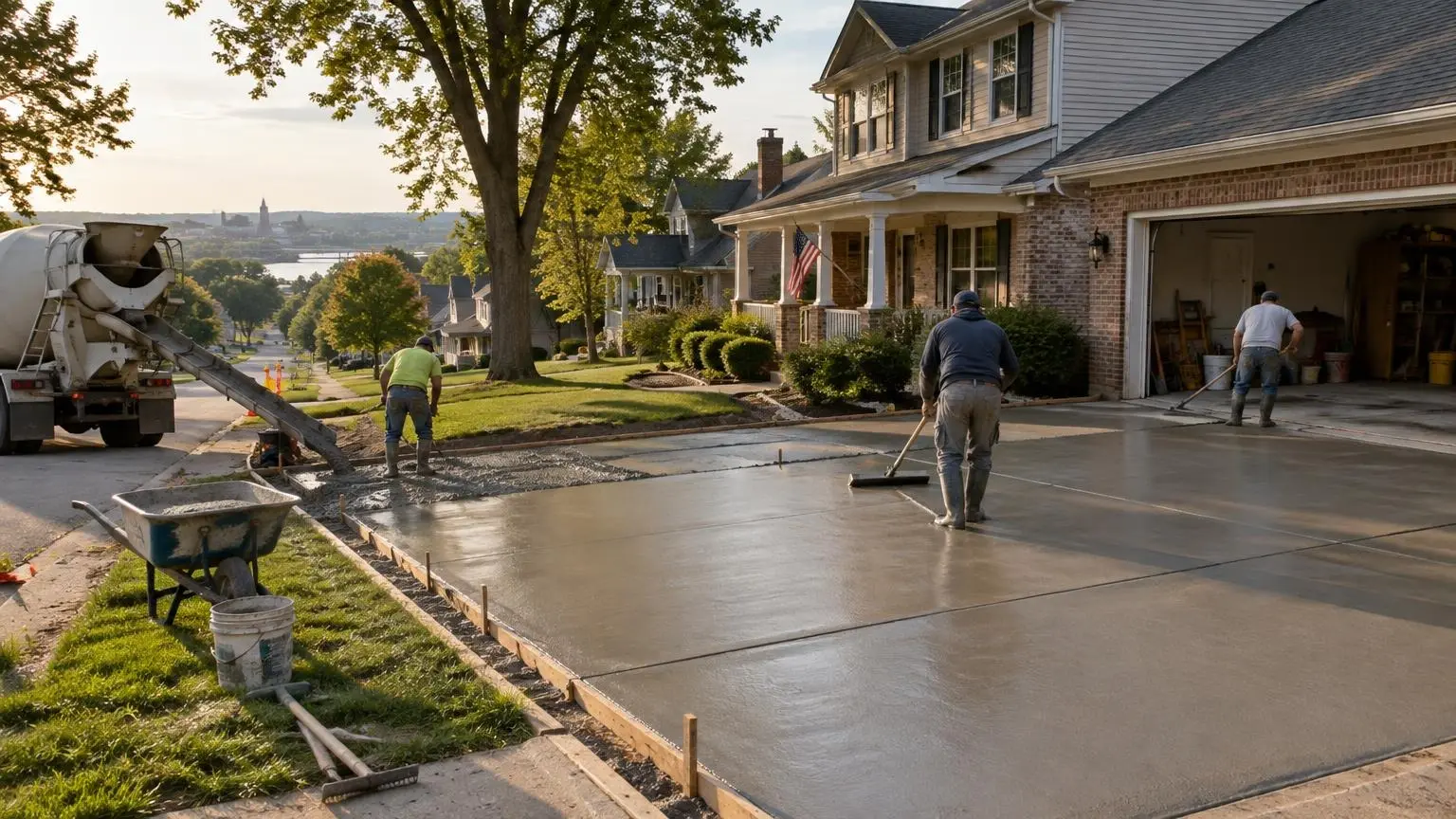
Backyard patios, walk-out pads and patio extensions
Concrete Patios in Lafayette, IN
A patio that sheds rain away from the house and stays flat for decades.
- No-cost site visit, then a written price broken out line by line
- Outdoor pours use air-entrained mix over compacted stone, with joints laid out ahead of time
- Permit and right-of-way rules looked up for your street before a date is set
Planning a Patio for a Lafayette Backyard
Concrete Patios are usually the first big outdoor project on a Lafayette home, and the ones that disappoint tend to fail in the same ways: too small, sloped toward the house, or poured on loose fill next to the foundation that settles a year later. Lafayette gets close to 40 inches of rain and melted snow a year, and in a wet spring the ground around many homes stays soft for weeks. A patio here has to move water off and away, and it has to sit on ground that will not sink.
Start with how you will use it
A table for six with chairs pulled back needs roughly a 12 by 12 foot space at the least. A grill station, a fire pit set back from the seating, or a path from the back door to the garage all change the shape. We walk the yard with you, mark the outline, and talk about sun and shade, how the back door swings, where the downspouts drain and where the patio meets the lawn. Doing this on paper first is much cheaper than finding out after the pour that the table does not fit.
Getting the base and slope right
Soil next to a house is often backfill that was pushed in after the basement or crawlspace was built. It looks solid and then settles, which is why so many older patios tilt toward the house. We dig out soft material, compact a gravel base in layers, and set the slab with a gentle fall away from the foundation so rain runs to the yard. HomeGuide notes that a standard patio is about 4 inches thick and that patios carrying a hot tub or outdoor kitchen should be about 6 inches with extra reinforcement. Where the patio meets the house we place an isolation joint so the slab can move on its own.
Finish options
- Broom finish: the standard. Good grip when wet and the lowest cost.
- Smooth or light trowel: cleaner look, but slicker when wet or frosty, so we use it carefully outdoors.
- Exposed aggregate: the top paste is washed off to show the stone. Very good traction and hides dirt.
- Colored or stained: integral color in the mix or a stain after curing.
- Stamped: patterned to look like stone, brick or slate; see our Stamped Concrete page.
- Borders: a contrasting border or saw-cut pattern that breaks up a large plain slab.
Signs an old patio should go
Tilting toward the house, water pooling against the foundation, big cracks with one side raised, or a surface that has scaled down to the stone are all signs the patio is past repair. If it has only sunk evenly and the concrete is still sound, leveling may be cheaper. We will tell you which.
Care
Wait about 28 days before sealing. Reseal every few years, and more often near a pool or where snow from the roof piles up. Keep winter salt off the patio entirely; there is rarely a need to salt a backyard slab. Do not set a fire pit directly on the concrete without a heat-proof base, since high heat can crack and spall the surface.
Patio Work We Handle
From a simple pad off the back door to a larger outdoor living space.
New backyard patios
Laid out with you, sloped away from the house and built on a compacted base.
Patio replacement
Old, tilted or scaled patios broken out and replaced.
Patio extensions
New concrete tied to an existing sound slab with dowels or an isolation joint.
Hot tub and grill pads
Thicker, reinforced sections sized for the load.
Walkways to the patio
Paths from the driveway, garage or gate poured with the patio.
Decorative finishes
Exposed aggregate, color, borders or stamped patterns.
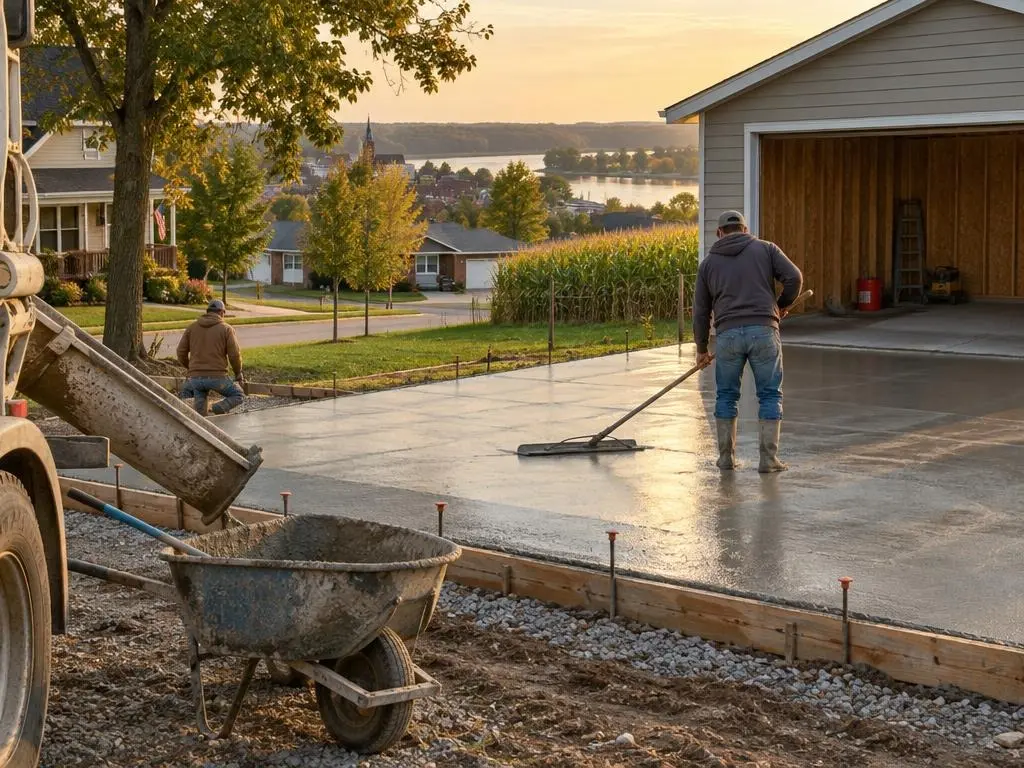
Typical Concrete Patio Costs
| Patio size or finish | Published range |
|---|---|
| Plain concrete, per sq ft | $4 to $12 |
| Broom finish, per sq ft | $6 to $13 |
| Exposed aggregate, per sq ft | $7 to $18 |
| 10' x 10' (100 sq ft), plain | $400 to $1,200 |
| 12' x 12' (144 sq ft), plain | $600 to $1,700 |
| 16' x 16' (256 sq ft), plain | $1,000 to $3,100 |
| 20' x 20' (400 sq ft), plain | $1,600 to $4,800 |
National ranges from HomeGuide's concrete patio cost guide. Access to the backyard, removal of an old patio and finish choices change the total. Your written estimate is the price.
How a Patio Job Goes
1. Lay it out
We mark the shape in the yard, check drainage and agree on size and finish.
2. Excavate and base
Soft soil dug out, gravel compacted, forms set with slope away from the house.
3. Pour and finish
Air-entrained concrete placed, finished as chosen and jointed.
4. Cure and seal
Light foot traffic after a day or two; sealing after about 28 days.
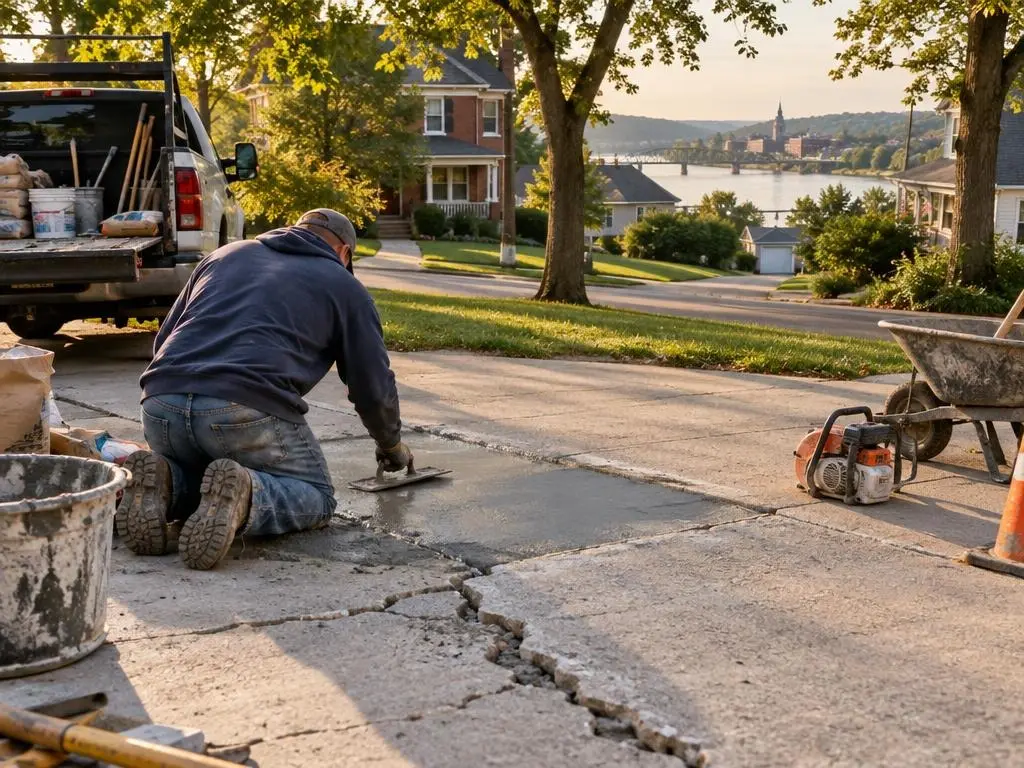
Concrete Patios Questions
How thick should a patio be?
About 4 inches for a standard patio, according to HomeGuide, and about 6 inches with extra reinforcement under a hot tub or outdoor kitchen.
How long does a concrete patio last?
HomeGuide lists 30 to 50 years for a concrete patio with regular maintenance. Slope, base and sealing make the biggest difference.
Can a truck get to my backyard?
Often not directly. When the truck cannot reach, we use a pump or buggies to move the concrete. That adds cost, and the quote will say so.
Should my patio be sealed?
Yes. A penetrating sealer slows how much water soaks in, which matters in a freeze-thaw climate. Seal after the slab has cured, then every few years.
Concrete Patios Service Areas
- Concrete Contractors in Lafayette, IN
- Concrete Contractors in West Lafayette, IN
- Concrete Contractors in Wea Township, IN
- Concrete Contractors in Battle Ground, IN
- Concrete Contractors in Dayton, IN
- Concrete Contractors in Shadeland, IN
- Concrete Contractors in Clarks Hill, IN
- Concrete Contractors in Otterbein, IN
- Concrete Contractors in Brookston, IN
- Concrete Contractors in Delphi, IN
- Concrete Contractors in Flora, IN
- Concrete Contractors in Monticello, IN
- Concrete Contractors in Frankfort, IN
- Concrete Contractors in Rossville, IN
- Concrete Contractors in Mulberry, IN
- Concrete Contractors in Crawfordsville, IN
- Concrete Contractors in Linden, IN
- Concrete Contractors in Attica, IN
- Concrete Contractors in Williamsport, IN
- Concrete Contractors in Covington, IN
- Concrete Contractors in Fowler, IN
- Concrete Contractors in Oxford, IN
Get a Concrete Patios Estimate
Free on-site estimates for concrete patios in Lafayette and surrounding towns.